Oriental Afro House DJ Crates for Sale: The 2026 Desert-Groove Blueprint
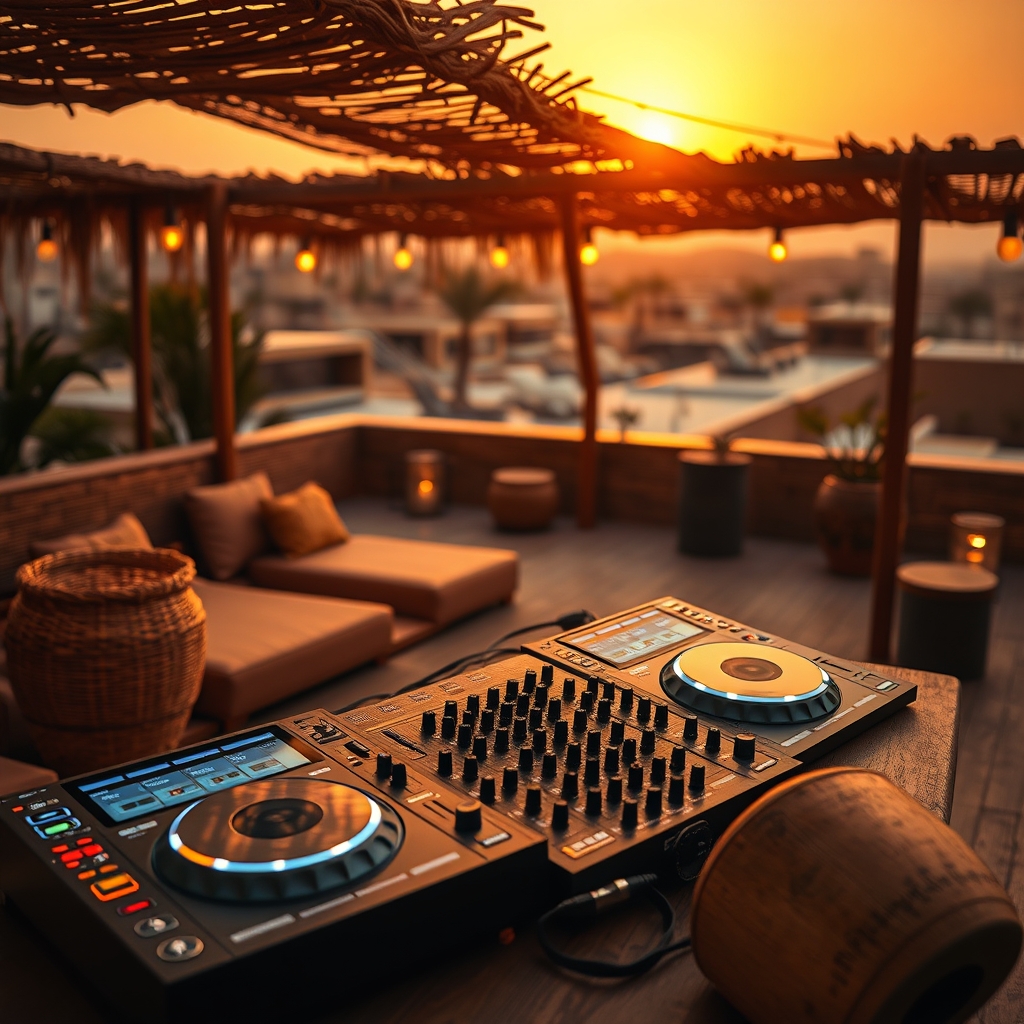
Search "Arabic Afro House" right now and you'll find playlists stacking hundreds of thousands of saves, TikTok edits tagged #DesertHouse and #ArabianGrooves, and sample pack shops rushing out Middle Eastern loop libraries. This isn't a niche crossover anymore. It's the sound filling terraces from Tulum to Marrakech to your local rooftop party, and if your crate doesn't have it yet, you're already behind the request board.
If you've been building sets off our Afro House DJ crates for sale and separately digging through Arabic mashup packs, it's time to stop treating them as two different nights. This is one genre now. Here's how working DJs are actually building it into sets in 2026.
What is "Oriental Afro House" actually
It's Afro House's tribal percussion, deep sub-bass, and hypnotic 4-on-the-floor groove, layered with Arabic vocal lines, oud, ney flute, or darbuka hits pulled from Middle Eastern folk and pop. Producers like Keinemusik, Francis Mercier, and Hugel have been pushing edits in this lane, and the label output has followed — you'll see it filed as "Oriental House," "Desert House," or "Ethnic House" depending on the platform, but it's the same crate.
The appeal for DJs is obvious: it's melodic enough to hold a crowd's attention but percussive enough to keep the floor moving without a drop-chasing build-up. It works for sunset sets, weddings with mixed cultural guest lists, and late-night rooms that want texture instead of noise.
What BPM and key should you be mixing at
Stick close to standard Afro House tempo. Most Oriental Afro House edits sit in the 120–128 BPM range, with 122–124 BPM as the sweet spot where the darbuka rolls and vocal phrasing breathe properly. Push past 128 and the Arabic vocal runs start sounding rushed instead of hypnotic.
Key-wise, expect a lot of minor keys — Arabic maqam scales translate naturally to Camelot's A (minor) side. Practical workflow:
- Sort your crate by BPM first, then by Camelot code, so you're not hunting mid-set.
- Match energy before you match key — a big vocal moment into a stripped percussion break works even across adjacent Camelot numbers.
- Use a long blend, not a quick cut. These tracks live on atmosphere. Give the vocal room to land before you bring the next track's low end in.
- Keep an acapella out or instrumental version of your biggest Arabic vocal moment on standby — it's the easiest way to build a live mashup over an Afro House groove without needing a locked edit.
Building the crate: what actually belongs in it
You don't need a separate "Arabic" folder and a separate "Afro House" folder anymore. Consolidate. Here's what should be sitting in your Rekordbox or Serato crate for this sound:
- Straight Oriental Afro House edits — tracks built specifically around the fusion, so you're not doing the blending work live.
- Deep Afro House instrumentals — useful as a bed to drop an Arabic acapella over when you want a custom moment.
- Arabic vocal mashups and remixes — for the tracks your crowd already knows, remixed onto a house-friendly groove.
- Wedding-safe Arabic anthems — if you play events, guests will ask for these by name.
Our TOP ORIENTAL AFRO-HOUSE REMIXES 2026 crate is built exactly for this — Arabic-flavored vocals and instrumentation over Afro House rhythm section, tagged, keyed, and ready to drop straight into your set with no extra edit work. Pair it with Arabic-Afro Vol. 1 and Arabic-Afro Vol. 2 for depth, and TOP ORIENTAL REMIXES 2026 if you want the fusion pushed harder toward vocal-forward Arabic pop remixes.
Where does straight Afro House still fit
You still need pure Afro House in the crate — not everything needs the Arabic layer. Use it to open the set, reset the energy mid-way, or close out once the Arabic-vocal peak has passed. TOP AFRO HOUSE VOL 7 and THE ULTIMATE AFRO HOUSE BUNDLE give you that foundation to build the Oriental moments on top of, rather than playing 90 minutes of fusion back to back and wearing the novelty out.
Practical set structure for a sunset-to-peak room
If you're building a night around this sound, here's a structure that's working right now:
- Warm-up (120–122 BPM): pure Afro House, low vocal presence, let the room settle in.
- Rising (122–124 BPM): introduce the first Oriental Afro House edits — instrumental oud and percussion layers, no big vocal hooks yet.
- Peak (124–126 BPM): drop your strongest Arabic vocal moments here. This is where the acapella-over-instrumental trick pays off if you want something the crowd hasn't heard mixed this way before.
- Come-down (120–122 BPM): strip back to instrumental Afro House or organic downtempo, let the Arabic vocal textures fade into the background.
If your room needs a slower, more atmospheric close, Top Organic/Downtempo 2025 or Top organic/downtempo 2026 vol : 1 bridge that gap without killing the mood you just built.
Why this matters for your crate right now
Trend-chasing genres burn out fast. This one isn't a novelty — it's a genuine fusion of two scenes that were already strong on their own, and the search volume and playlist growth back that up. If you're already known for Afro House sets, adding Oriental Afro House costs you nothing and opens the set up to a wider crowd, including guests who'll request Arabic tracks whether you're ready for them or not.
That's the whole pitch behind DJ crates for sale at TOP DJ CRATES: handpicked, correctly tagged, high-quality WAV files that drop straight into Rekordbox or Serato with beatgrids and keys already sorted. No re-editing, no chasing down a clean acapella at 2am before a gig. Drag, drop, and play the sound your crowd is already searching for.
Browse the full crate library and build the fusion crate before every other DJ in your market catches up to it.